Categories or cases for Spanish grammar

My time and thoughts have mostly been in my classroom over the last few weeks, so this post is more teacher-y than usual. But it does, I hope, contain some interesting observations about some core grammatical issues in Spanish.

As I noted in an earlier post, Spanish teachers have to explain many differences that exist in Spanish but not in English. These vary in difficulty for the native English speaker. Simple vocabulary differences such as tocar versus jugar, which both mean “to play” (an instrument versus a sport), are the easiest. Other vocabulary differences are more complicated: for example, how por and para divvy up the various meanings of English “for”, or ser and estar the meanings of “to be”. Harder still are grammatical differences that English lacks either mostly (e.g. subjunctive versus indicative moods) or entirely (e.g. the pretérito and imperfecto aspects of the past tense).

When teaching these more challenging differences, I’m often torn between explaining them in terms of categories or cases. The former approach seeks overarching principles that distinguish the Spanish forms. The latter metaphorically throws up its hands and instead details the specific sub-uses of each form. As a linguist I much prefer the former since categorical differences often relate to core semantic concepts. In practice I always provide both frameworks and emphasize one or the other, depending on the topic at hand.

I ran head-first into this issue the first time I taught the Spanish past tense. The usual sequence in an American classroom is to teach the pretérito first, then the imperfecto, then how to use them in conjunction. For the final stage I followed the practice of a more experienced colleague and taught the students the SIMBA CHEATED mnemonic. SIMBA stands for some basic uses of the pretérito: Single actions, Interruptions, Main events, Beginnings and endings, and Arrivals or departures. CHEATED does the same for the imperfecto: describing someone or something’s Characteristics, Health, Emotion, or Age, telling Time, describing Endless activities, and giving a Date.

The net result: my students didn’t see the forest for the trees. In other words, they learned the specific cases covered by SIMBA CHEATED but failed to generalize to the overall difference between the two aspects: that the pretérito relates events, i.e. “what happened”, while the imperfecto describes the past, providing backgrounds and details.

This failure was a loss at an intellectual level, for this aspectual distinction is a perfect example of how different languages encode the world in different ways. At a practical level, the mnemonic slowed students down, since they tended to run through the entire mental checklist before using a past tense. It also proved useless when we moved on to subtler distinctions in the past tense. For example, while conocer retains its core meaning of “to know someone” in the imperfecto, in the pretérito it means “to meet” someone. This makes perfect sense — if one focuses on the overarching use of the pretérito to relate events.

I therefore now try to emphasize the broad categories of “event” and “description” as much as possible when teaching the past tense. While I do provide a reference sheet (see my teaching page) that shows some specific applications of these categories, I stay away from mnemonics and always aim to extract the basic principles from the examples that come up in class.

My approach to the indicative/subjunctive distinction still focuses mostly on categories, but veers slightly in the direction of cases (again see my teaching page). I focus on the overarching use of the indicative for reality and the subjunctive for uncertainty since this covers most uses of the two moods. However, in this case I do teach an acronym: the famous WEIRDO (Wish/Want, Emotions, Impersonal expressions, Require/Recommend, Doubt/Deny, and Ojalá). This is partly because some of the uses it covers trump the reality/uncertainty difference (e.g. emotional contexts like Me alegro de que Pablo esté aquí, where Pablo actually is here), but mostly as a handy way to remind students to practice a variety of subjunctive contexts in their written work.

My approach to por and para (teaching page again), in contrast, focuses almost entirely on cases. These two words correspond to so many different meanings of English “for” that I find it most helpful to emphasize individual uses, such as para for destinations and por for duration. However, since at a very high level para often implies directionality and por, apportionment, I also suggest the graphical metaphors of an arrow for para (X > Y) and a ratio line for por (X/Y). While I don’t expect the average student to find these useful in practice, he or she should at least be aware that the division of “for” into por and para isn’t random. There’s a method to the Spanish madness!


Spanish vocabulary that’s hard to learn

Writing Sunday’s post about unfamiliar vocabulary in El séptimo velo, and in particular the words metralla and ametrrallada, started me thinking somewhat nostalgically about Spanish vocabulary I’ve found hard to learn, and what strategies have worked for me. In general, since I’m an analytic thinker, especially when it comes to language, I have trouble with words that I can’t tackle using cognates or other types of linguistic analysis. Strangely, the best solution for me in such cases is often anti-analytic. I specialize in truly ad hoc mnemonics, often based on false cognates (so-called amigos falsos). The more far-fetched, the better.

Some kinship terms beyond the basics caused me a headache “back in the day”. Sobrino and sobrina “nephew/niece”, for instance, lack an English cognate. My ad hoc mnemonic for them is therefore based on a false cognate: I think of a “sober” (i.e. non-drinking) nephew. Nieto and nieta “grandchild” are cognate with “nephew”, unfortunately; we owe to French the perversion of the original Latin meaning, which Spanish has preserved. My solution, then, is to picture a “nice” grandchild.

In-law terms were a mixed bag for me. Suegro and suegra “parents-in-law” came easily. These are ugly words — they sound like sweat or suet — which I have always found reminiscent of the negative stereotype of these relatives, especially mothers-in-law. (My own mother-in-law is an exception, thank goodness.) I had more trouble with other in-law terms. I finally mastered cuñado/cuñada “brother/sister-in-law” after learning the word cuna “cradle”, since one might visit one’s sister-in-law to admire her baby. My mnemonics for yerno and nuera “son/daughter-in-law” are truly bizarre. To me these sound like terms one might associate with animal husbandry, like yearling or nursling. And the propagation of the family line is, after all, the point of acquiring these relations.

Going back to metralla and ametrrallada, I’ve been seeing the word ametralladora “machine gun” for years without managing to remember it. I think the noun’s ending was playing with my analytic brain. The noun suffix or or -ora usually connotes a person or object that produces something. A tostador (or tostadora) makes toast. An escritor creates written work. An aspirador creates suction. But an ametralladora doesn’t make anything; it just kills.

Had I looked up the word’s etymology, as I finally did on Sunday, I would have known that metralla means shrapnel. Now I will always remember the word, because an ametralladora produces metralla. I guess the moral here is that one should always research etymology when dealing with a stubborn word.

My current struggle is with a substantial class of action verbs beginning with de- or des-, including derrotar, derretirse, derrumbar, deslizar, and desmoronar. These all have negative meanings: defeat, melt, demolish, slide (this can be negative if you’re on a cliff), and collapse. I have trouble with these words because I encountered all of them at about the same time, when I started teaching Spanish and began working on my language skills seriously again. I think of this as the geshem/shemesh problem. These two words mean “snow” and “rain” in Hebrew (or is it “sun” and “rain”?), but because I learned them together, I can never remember which is which.

The solution for the de(s)- set seems to be continued vigorous reading. Each time I see one of these words in context it becomes a little more distinct. Maybe in the not-to-distant future I’ll be ready to use them in conversation. Then I can go on to the next hurdle! There is always more to learn.

Spanish vocabulary in El séptimo velo

For the last several weeks I’ve been making slow but steady progress through Juan Manuel de Prada’s towering novel El séptimo velo. Like this blog, it’s been taking back seat to my teaching. As described in an earlier post, El séptimo velo is a romantic novel set mostly in post-war France and contemporary Spain. I learned of it from a reading list distributed by a professor at the Universidad Complutense de Madrid.

This novel is unbelievably rich in vocabulary. My Spanish is excellent, I think, good enough to tear through a sophisticated thriller like Guillermo Martínez’s La muerte lenta de Luciana B. in a matter of hours, and in a typical book I rarely find more than two or three new words on a page. De Prada’s Spanish came as such a shock that I decided, as an intellectual exercise, to (i) write down all the new words I encountered on a random page, (ii) record what I thought they meant, and why (iii) look up their actual meanings, and (iv) blog the results. The random page was p. 315 of the 2008 Harper Collins Planeta paperback.

This humbling experiment turned up 30 new words on one page!!! — of which I correctly interpreted more than half. The first part of this statistic gave me second thoughts — and even third and fourth — about writing this post. Revealing how much Spanish vocabulary I still don’t know, after years of studying and teaching the language, is somewhat embarrassing. But I decided to go ahead because vocabulary, and how we learn it, is such an important topic.

For one thing, while English speakers may be aware that English has an enormous lexicon — over 450,000 words, according to David Crystal — they may not realize the extent of the Spanish lexicon. The Real Academia‘s dictionary has about 162,000 words, almost 100,000 more than an educated person learns in a lifetime (again according to Crystal). The Spanish lexicon combines a native Latin base with substantial borrowings, mostly from Arabic, Germanic, other Romance languages, Latin (again) and Greek, English, and native American languages.

Second, since I’m always telling my students to use context, cognates, and familiar Spanish vocabulary to deduce meanings, I was curious to see how far this actually takes a reader (i.e., me). The use of context in particular is of broad linguistic interest, because it enables babies to learn language, and adults to communicate under difficult conditions, for example over a poor telephone connection.

Finally, I’ve become fascinated with de Prada’s Spanish. His vocabulary is not only immense but also erudite.  Elsewhere in the book, for example, he uses preñada, instead of embarazada, to mean “pregnant”. I would love to hear how native Spanish readers of this blog respond to the vocabulary listed below. How obscure is it?

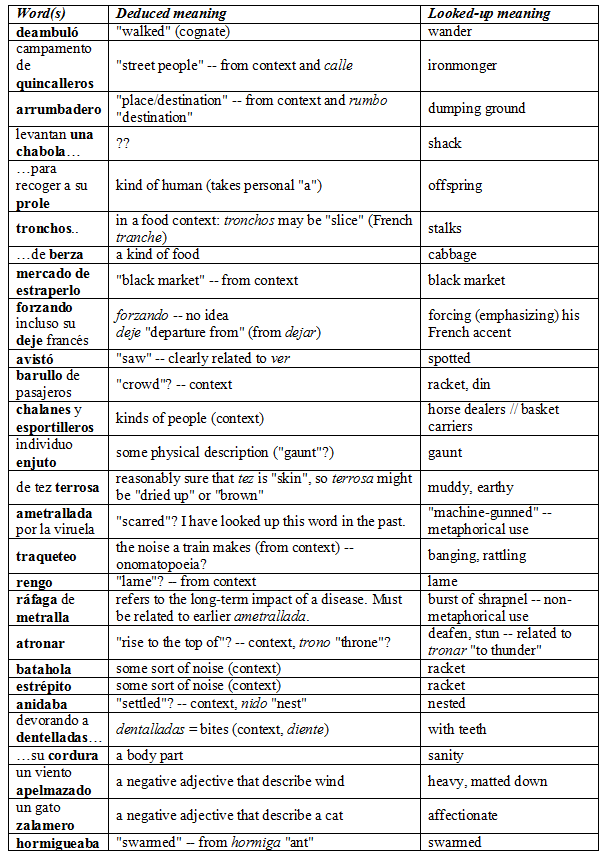
The table below details the fruits of my analysis. As a summary:

  • The only word I couldn’t even guess at was chabola.
  • I misinterpreted several words: troncho, deje, forzar (in a weird context), barullo, ráfaga, metralla and ametrralladaatronar, corduraquincalleros, and zalamero. Of these, I came closest on deje (“accent”), recognizing its connection with dejar, and with barullo “racket, din” — I guessed “crowd”. The most personally galling were metralla and ametrrallada, because I’ve tried to memorize the word ametralladora (“machine gun”) several times. I’ve also run into zalamero and may even have flash-carded it a few years ago.
  • I correctly deduced the general semantic category of several words from context, like a good Spanish student (or baby). For example, I assumed that berza “cabbage” was a kind of food, and batahola “racket, din” a kind of noise. Other words in this category were chalánproleenjutoestrépitoapelmazado, esportillero, and arrumbadero. The last two were quite obscure. Esportillero wasn’t in wordreference.com, though I found it in the RAE. Arrumbadero was in neither. I “looked it up” by consulting the friendly and expert participants in the Word Reference Spanish vocabulary forum.
  • I figured out several meanings thanks to English cognates and my existing Spanish vocabulary. For example, English amble and ambulatory gave me deambuló, and Spanish hormiga “ant” gave me hormiguear “to swarm”.
  • Context made estraperlo and traquateo absolutely clear. Onomatopoeia also helped with the latter.

Séptimo velo

Unas similitudes casuales entre el español y el hebreo

[Today is Spanish Friday so this post is in Spanish. ¡Scroll down for English translation!]

En honor de la temporada actual de los días festivos judíos (Rosh Hashana y Yom Kippur), decidí señalar unas similitudes entre el español y el hebreo. Estas similitudes son completamente casuales. Es decir que los dos idiomas no están nada relacionados. El español es un idioma románico, de la familia indo-europea, y el hebreo es semítico, de la familia afroasiática. Ni han tenido los dos idiomas bastante contacto geográfico como para influenciarse. Al contrario, estas similitudes son una muestra de tendencias lingüísticas generales.

  • El español y el hebreo tienen sustantivos masculinos y femeninos.
  • En los dos idiomas, los adjetivos y artículos tienen que concordar con el género y número del sustantivo que describen.
  • En los dos idiomas, los adjetivos siguen los sustantivos.
  • Los dos idiomas tienen el sonido gutural que en español se escribe con jg (antes de /e/ e /i/).
  • Los dos idiomas tienen cinco vocales: /a/, /e/, /i/, /o/, y /u/.
  • Los dos idiomas tienen tres tiempos verbales: pasado, presente, y futuro.
  • Los dos idiomas tienen distintas clases de verbos en cuanto a la conjugación: las categorías -ar-er, e -ir del español, y los siete binyanim del hebreo.
  • Las conjugaciones del pasado y del futuro de los dos idiomas reflejan tres personas (primera persona, segunda persona, tercera persona) y dos números (singular y plural).
  • En los dos idiomas los complementos directos se señalen con un marcador distinto: el a personal en español y et en hebreo, aunque aquello se limita a complementos directos humanos.

****************************************************************

In honor of the current Jewish High Holiday season, I decided to point out some similarities between Spanish and Hebrew. These similarities are completely coincidental because the two languages aren’t at all related. Spanish is a Romance language from the Indo-European family, and Hebrew is a Semitic language from the Afro-Asiatic family. Nor have the languages had enough geographical contact to influence each other by borrowing. Rather, these similarities are evidence of general linguistic tendencies.

  • Spanish and Hebrew have masculine and feminine nouns.
  • In both languages, adjectives and articles must agree in number and gender with the nouns they modify.
  • In both languages, adjectives follow nouns.
  • Both languages have the guttural /x/ sound (written with a j or g in Spanish).
  • Both have five vowel sounds: /a/, /e/, /i/, /o/, and /u/.
  • Both have past, present, and future verb tenses.
  • Both have distinct verbal conjugation classes: -ar-er, and -ir verbs in Spanish, and the seven binyanim in Hebrew.
  • Past and future conjugations in the two languages reflect three persons (first, second, and third person) and two numbers (singular and plural).
  • Both languages have a direct object marker: the a personal in Spanish and et in Hebrew, although the former is limited to human direct objects.

Top 10 reasons why I’m a fan of the Spanish Real Academia

I’ve been a fan of the Real Academia Española, or RAE, the Spanish language Academy, for years. The Academy, in case you’re not familiar with it, is a scholarly organization of professors, writers, journalists, and translators. Every Spanish-speaking country has its own Academy. Together, the various Academies form the Asociación de Academias de la Lengua Española. The RAE is the Academy of Spain itself, founded in 1713. However, the term RAE is often used to refer to the overall Asociación, both for convenience and because the RAE retains a lead role: for example, hosting the Asociación‘s on-line dictionary.

Here are the top 10 reasons why I’m a fan of the Academia system. This slideshow is full of links; please let me know if any fail for you.

My least favorite Spanish word

In an earlier post I wrote about two of my favorite Spanish words: esdrújulo and azulejo. I love esdrújulo because it reminds me of my academic research on Spanish stress and because of its role in an amusing family anecdote. I love azulejo because it starred in one of my happiest Spanish memories, when my high school Spanish came flooding back to me in Madrid after a few years off to learn French.

I also have a least favorite Spanish word: víctima, which means victim. My problem with the word is that it’s always feminine. A woman is una víctima and a man is una víctima, too. This really bothers me as a woman. Why should all victims be feminine?

As a linguist, I have more perspective. Víctima is feminine by historical accident, not by misogynist design: it comes from the feminine Latin noun victima, meaning a person or animal killed as a sacrifice. Nor is it the only Spanish noun whose gender is unaffected by that of the person it refers to. Bebéángel, and personaje are always masculine, and the word persona itself is always feminine. (So is gente, though it doesn’t refer to an individual person.) This is a small group of words, but all well-established in the language.

Moreover, I know that there’s nothing intrinsic about noun gender, once we get beyond words like madre and padre. There’s nothing masculine about a libro and estante (book and bookshelf), or feminine about a mesa and silla (table and chair). For that matter, Spanish words referring to many aspects of the female experience are masculine, including embarazo and parto (pregnancy and childbirth), útero (obvious), and pecho (breast). This is the kind of mismatch that inspires beginning Spanish students to change el vestido “the dress” to la vestida, always a chuckle-worthy mistake. I’m sure we could come up with a similar list of feminine vocabulary related to the male experience.

Nevertheless, it is overwhelmingly the case, with the few exceptions mentioned above, that Spanish words for people “swing” either masculine or feminine, depending on whom they refer to. These include several other nouns that, like víctima, end in -a, like dentista, turista, and atleta. Thus Rafael Nadal es un atleta espléndido (masc.) and Arantxa Arantxa Sánchez Vicari is una atleta espléndida (fem.) “People” nouns ending in -e swing as well: thus el or la agente, estudiante, cantante, and so on  Most nouns that apply to people, of course, have distinct masculine and feminine forms, like profesor and profesora or médico and médica.

tenistas

Un tenista espléndido y una tenista espléndida.

Even a criminal can be un or una!!!

According to the Collins dictionary, though not the Real Academia, there’s been some progress toward gender flexibility in the baby department. Collins defines bebé as either masculine and feminine, and reports a specifically feminine variant beba (no accent) in Argentina. With this example as an inspiration, and in the spirit of feminist linguistic revolt, I hereby resolve to use un víctima in my own Spanish when referring to a male victim. Won’t you join me?

UN víctima masculinO


Cada cual arrima el ascua a su sardina

[Today is Spanish Friday so this post is in Spanish. ¡Scroll down for English translation!]

Hoy tardé quince minutos en leer una línea de una novela española.

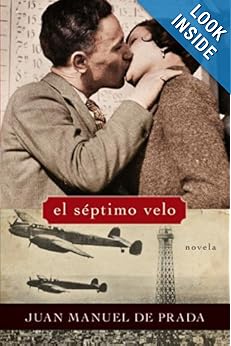
La novela es El séptimo velo, por Juan Manuel de Prada, un escritor español. Se publicó en 2007 y ganó el Premio Biblioteca Breve. Es larga (no comprendo el “Breve”) y bastante difícil de leer, con un vocabulario riquísimo. Si no hubiera adoptado la filosofía de “just read“, tardaría meses en leerla. El séptimo velo es la historia del amor trágico entre Lucía, una artista circense refugiada en Francia durante la Segunda Guerra Mundial, y Jules, un soldado francés amnésico.
En las semanas finales de la guerra, mientras el padre de Lucía está muriendo lenta y dolorosamente, Jules, tras leer en un periódico sobre la situación sociopolítica francesa, declara su incomprensión de la mezquindad de la gente, que se divide en la que debe ser su hora más unida. El padre recurre a un refrán español: “Cada cual arrima el ascua a su sardina”.

Fue esa frase que me tardó quince minutos, primero en comprender, luego en disfrutar. Una traducción palabra por palabra resultó completamente sin sentido: “Everybody brings an ember to his own sardine.” Gracias a Dios encontré una discusión bien informada sobre el refrán en el foro de Vocabulario Español/Inglés en Wordreference.com. Un tal “Oriental” (un apodo) lo explicó así:

Este refrán nació en Andalucía, cuando la sardina era plato habitual entre los braceros. Las comidas se hacían en común y todos se disponían alrededor de una fogata de manera que cada uno asaba su ración, tomaba un ascua, y la iba arrimando sólo a su propia sardina. De este modo, la hoguera se debilitaba, e incluso llegaba a apagarse. Nadie se preocupaba de volver a encender porque no lo entendían como cosa suya. El asunto llegó a tal punto que acabaron por suprimir la sardina de los almuerzos. El refrán quedó como muestra de la insolidaridad de los hombres.

Otros comentaron que el refrán inglés más cercano es “looking out for number one”, es decir sí mismo, pero a este le falta la implicación que las acciones individuales vayan reduciendo el bienestar comunitario.

Además del interés histórico del refrán mismo, la palabra ascua me pareció muy interesante. Es uno de los pocos sustantivos españoles masculinos (como mapa) que terminan en -a, pero no en -ma, ni en -ista. También es una palabra de etimología incierta. La RAE no ofrece ninguna etimología; el Breve diccionario etimológico de la lengua castellana (Joan Corominas, 1973) elimina orígenes posibles germánicos y vascos, sugiriendo un origen “probable” prerromano.

Así fue: un trozo del español difícil pero riquísimo.

——————————————————————————————————————-

Today, it took me fifteen minutes to read one line of a Spanish novel.

The novel is El séptimo velo (“The Seventh Veil”), by Juan Manuel de Prada, a Spanish writer. It was published in 2007 and won the Biblioteca Breve prize. It’s long (why “Breve”, I have no idea) and fairly hard going, with an extremely rich vocabulary. If I hadn’t adopted the philosophy of “just read“, it would take me months to finish it. El séptimo velo is the story of the tragic love between Lucía, a Spanish circus performer who is a refugee in France during the Second World War, and Jules, an amnesiac French soldier.

In the last weeks of the war, as Lucía’s father is slowly and painfully dying, after Jules reads in a newspaper about the sociopolitical situation in France, he exclaims that he can’t understand how the French people are being so selfish and divided at a time when they should be the most united. As an explanation, the father quotes the Spanish proverb “Cada cual arrima el ascua a su sardina”.

This is the sentence that took me fifteen minutes, first to understand, then to appreciate. A literal translation is impossible, resulting in something like “Everybody brings an ember to his own sardine.” Fortunately I found a well-informed discussion of this proverb in the Spanish/English Vocabulary Forum on Wordreference.com. A contributor with the moniker “Oriental” explained:

This saying comes from Andalusia, in the days when sardines were a regular dish for laborers. Cooking was communal and everyone sat around a bonfire so that each person, to roast their portion, would take an ember and bring it close to their own sardine. This meant that the bonfire would weaken and even go out. Nobody relit it because they didn’t see it as their own responsibility. The situation got so bad that they stopped having sardines for lunch. The proverb remained as a proof of mankind’s lack of solidarity.

Others commented that the closest English expression is “looking out for number one”, that is, for oneself, but that the English version lacks the implication that the individual actions diminish the group’s well-being.

Besides the historical interest of the proverb, the word ascua “ember” itself turned out to be quite interesting. It’s one of the few masculine Spanish nouns (like mapa) that ends in -a, but not -ma or -ista. Also, its origin is uncertain. The Real Academia doesn’t give any etymology. Joan Corominas’s Breve diccionario etimológico de la lengua castellana (1973) rules out a possible Germanic or Basque origin, and suggests that the word is probably pre-Roman.

So there you have it: a challenging but rewarding morsel of Spanish.


Some surprising Spanish-English cognates

I’ve always been a big fan of cognates, i.e. genetically related words across languages, like Spanish insistir and English insist. As a language learner, I’ve found cognates enormously helpful in reading and in memorizing vocabulary. I really missed them when I studied Hebrew.

As a teacher, I point out cognates and also teach my students to use them just as I do: as an aid in reading and in memorization. An additional benefit is intellectual. Articles in the popular press with titles like “Latin comeback in the schools” invariably make the claim that studying Latin helps students learn the roots of English vocabulary. There’s no reason why students can’t have the same benefit from studying Spanish or other Romance languages.

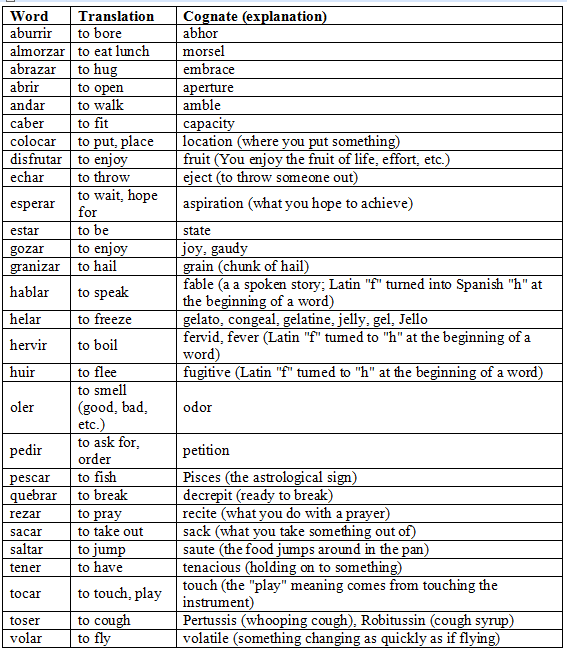
As a linguist, I’m happiest when I learn a non-obvious cognate: the kind that gives you an “Aha!” or “Really?” moment. The table below lists my favorite “Aha!” Spanish/English verb cognates. For example, I’ve always explained the verb disfrutar to my students metaphorically, as enjoying the fruits of life (or whatever) — here I normally mime plucking fruit from a tree – but until I looked it up I didn’t realize that this was the verb’s actual etymology. Again, I’ve left out what I consider to be more obvious cognates, such as savvy, savory, or homo sapiens for sabercognitive or acquaintance for conocer, or dictate for decir. [There, I worked them in anyway!] My sources for the table are the etymologies on the Real Academia website and Douglas Harper’s very impressive Online Etymology Dictionary, which is great fun to browse.

Please write in with your own favorite cognates, including cognates for nouns and adjectives.

Some verb cognates

Summer summary for spanishlinguist.us

While I’m not much of a “beach person” — I don’t like the heat! — the last few weeks I’ve been craving a beach day. It really wouldn’t feel like summer without going at least once. So on Saturday, a girlfriend and I visited lovely, peaceful Hammonasset State Park in Madison, CT. It hit the spot.

Hammonasset Beach State Park, CT

Just before leaving for the beach I received the long-anticipated “”Welcome to the fall semester” email from the Spanish language coordinators at Fordham University (this is where I teach). All of a sudden the first day of classes (Wednesday!) feels real. I’m sure my future students are going through the same mental process. I will be teaching two sections of second-semester Spanish, and getting to know a new textbook, Gente.

These end-of-the-season events have inspired me to review the summer’s activity on spanishlinguist.us. I’ve published 27 posts since the beginning of June, roughly 3 a week. My main focus (9 posts) has been on verbs, which are, or course, a Big Deal in Spanish. These include:

Five posts have concerned vocabulary: Spanish slang, Spanish last names (women’s issues and patronymics)  special vocabulary for disabilities, and new Spanish vocabulary from the economic crisis.

Five other posts have concerned the process of learning. Topics included mismatches between Spanish and English vocabulary (verging into grammar), the pedagogical value of reading popular fiction (including a terrific reading list), what I forgot when I didn’t speak Spanish for a few years, and the philosophy that “language is the only thing worth knowing even poorly.”

Four posts address Spanish spelling: accent marks, phonetic spelling (or not), x vs j, and x vs. cc.

Three posts address contemporary language issues: the minority languages of Spain, the high degree of metalinguistic awareness of normal Spanish speakers, and the political [in?]correctness of the language name Spanish.

This leaves two miscellaneous posts, on voseo and the surprising history of the word yand“.

Four of the above posts were part of Spanish Friday: here, here, here, and here.

During the summer the blog has been enriched by comments from readers from around the world. I really appreciate this and encourage you to keep writing. Please feel free to suggest new topics you’d like this blog to address, or enhancements — I’ve added an RSS feed but still haven’t invested any time in Twitter or Facebook. I much prefer to “just write”, but if any bells and whistles would make a difference I will invest the time. I just added a snazzy new background (made with Wordle) and hope it renders well on your screen.

To subscribe by email, use the form on the right.

It’s been a great summer, and I’m looking forward to continuing into the new academic year.

¿What’s in a Spanish name?

In today’s New York Times, Pamela Paul describes the challenges that she faces because, like many women in the United States, she uses her maiden name in professional contexts and her married name otherwise. These include practical issues, like whether her husband can use her Costco card; emotional challenges, like her children’s “permanent state of confusion”; and even legal issues. Ms. Paul was once detained at an airport for 40 minutes because her ticket and her ID had different names.

Since I’m always wearing my “Spanish glasses”, so to speak, I was immediately struck by how unnecessary these issues must seem to folks who follow the Hispanic naming system. Married women keep the same two last names they’ve had since birth: one apellido from their father and one from their mother. They can optionally add de X to show that they’re married to a Sr. X. This seems somewhat sexist, implying that a wife is her husband’s property, but at least it’s simple and consistent.

A celebrity example may be in order. The adorable Suri Cruise’s full name, Hispanic-style, would be Suri Cruise Holmes, after her father (Tom Cruise) and mother (Katie Holmes). If she were to marry, say, Knox Pitt Jolie (the son of Brad Pitt and Angelina Jolie), she could optionally go by the longer name Suri Cruise Holmes de Pitt. Suri and Knox’s children would all have the last names Pitt Cruise.

last namesI don’t have a dog in this hunt, personally. I kept my maiden name and haven’t had many problems with it. In fact, it’s a useful way to weed out sales calls, since the caller will often ask for me by my husband’s name or the reverse. But I do sometimes wish that the United States followed the Hispanic system so that there would be no ambiguity.

I’d love to hear from some readers from Spanish-speaking countries about their personal experiences with apellidos. How often do women use the de X convention? Is there any confusion with school registrations or other formalities involving children? Are you happy to be following the Hispanic system?